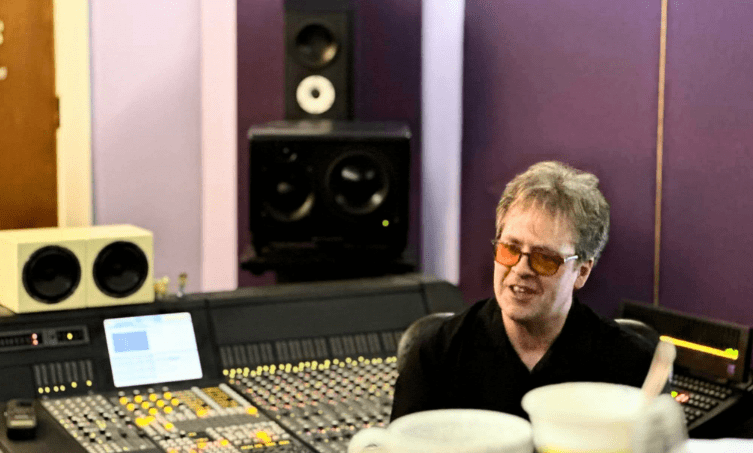
Glasgow indie-pop four-piece Brontës release their self-titled debut album in April 2026. The Mumble caught up with the man behind the desk
THE MUMBLE: Hello Stuart, its been a while since we had a chat – could you introduce yourself for new readers & tell us what you’ve been up to since the last time we got together
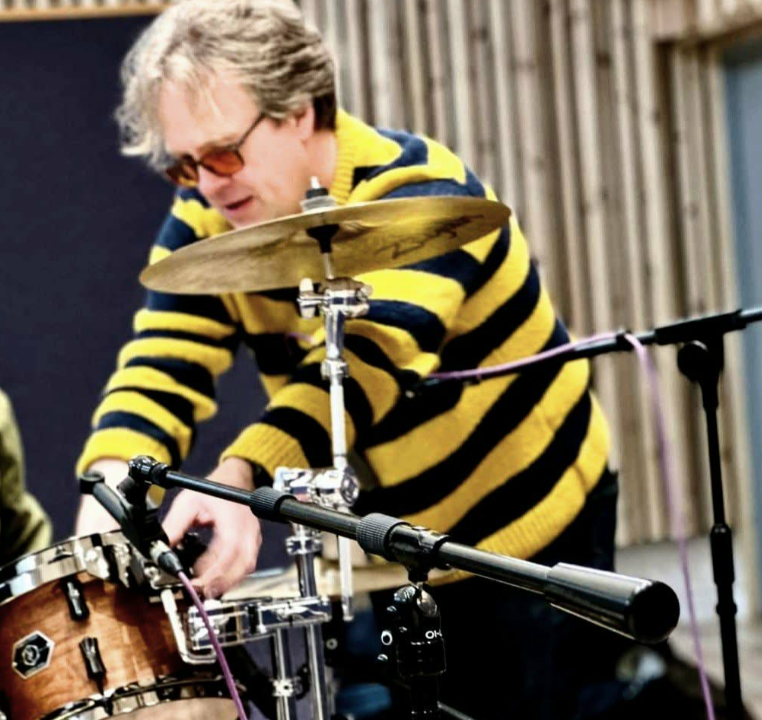
STUART: Hello, I’m Stuart MacLeod, I’m a recording engineer and producer based in Airdrie. I’ve been making records now for many years because I am very old. I reckon we last hooked up in about 2019? Since then I’ve been very, very busy!! I’ll try to just focus on some highlights but inevitably I’ll leave out something really good so apologies to those involved when I do.
Since 2019 I’ve had Amy Macdonald back in the studio, this time filming and recording a clip for Lamborghini. Lewis Capaldi did some recording and tour pre-production here. I’ve recorded strings, brass and drums for a couple of film and TV soundtracks with the legendary Gary Clark.
A couple of years ago I started working with the wonderful Last Night From Glasgow label, and we’ve had some notable successes together – including a run of four albums last year that all reached the Top 30 of various UK charts – Sister John went to number one in the Scottish album charts, The Muldoons reached number 1 in the UK Indie Breakers chart, The Cowboy Mouth and Louise Connell both reached number 3 in the Scottish Album Charts. In fact Louise’s album “Clients Of Suddenness” (full disclosure – I’m possibly biased here as I’m married to Louise) was the top-selling Scottish artist in the week her album came out, reaching number 27 in the UK albums chart, number 9 in the UK Indie Chart, number 13 in the UK Vinyl Sales chart, and number 23 in the UK Physical Sales chart. It is, of course, essential listening.
Last year I produced and/or engineered forthcoming albums for LNFG by The Bluebells, Wojtek the bear, Emma Dunlop, and of course, Brontës – all of these albums are fantastic and we have really high hopes for each one. I also did the strings and brass for the last Deacon Blue album (number 2 in the UK, number one in Scotland) and as a guitar player I managed to squeeze in a few gigs, including a couple supporting Simple Minds in the ridiculously plush environments of Blenheim Palace and Audley End.
MUMBLE: Sounds like a healthy & busy trajectory. Nice one! So we’re here to talk about your work with Brontës – can you tell us all about the band?
STUART: Brilliant four-piece from Lanarkshire-Renfrewshire-Glasgow areas. I think. They’re cool, funny, razor sharp, and seem to be able to come up with effortlessly catchy, hook-laden songs at the drop of a hat. Seriously, the speed they wrote the album at was ridiculous, and the songs are consistently strong. And witty.
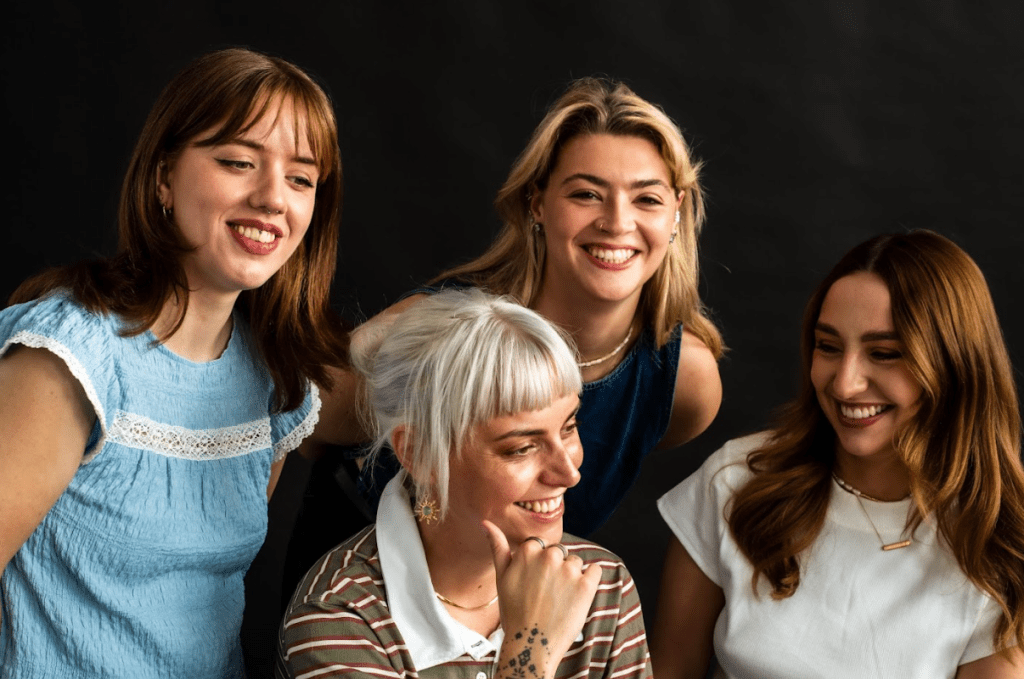
MUMBLE: A fun group, then – so who plays & sings what in the band; what sounds did they ask you to record for the tapestry?
STUART: Initially the album was just meant to be a 6-track EP, and at that point the line up was:
Eva Watt, lead vocals
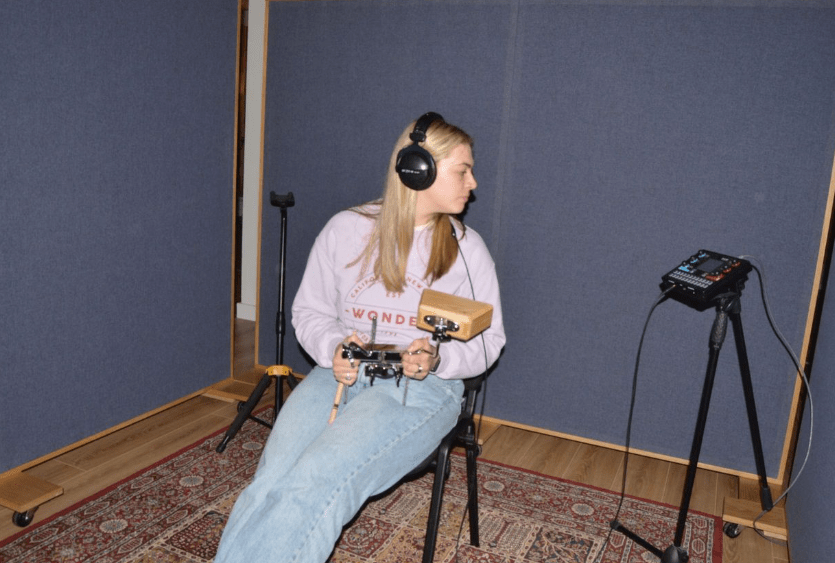
Amelia Haldane, drums and backing vocals
Erin Reidy, all guitars, bass, and backing vocals.
They’d slimmed the line-up down from a five piece not long before we started recording the album, and decided to scrap all the material they’d written up to that point and start from scratch. They gave themselves six weeks to write the EP, which was wild!
About a week before we were due to start the record they sent me very rough recordings of the new songs and I was blown away by how strong they were. Once we started recording the record we realised they were on a roll, and I encouraged them to go away and write another four songs and we’d do it as a proper album instead.
In all honesty, my thinking was that even if they just came up with four halfway decent tracks we’d have a great debut album on our hands because the initial six were so strong. Instead they came back to the studio with four of the best tracks on the album, including Wouldn’t Be Me, which for me was a standout single right from the word go.
They’d really set themselves a huge challenge by writing an entire album from scratch, and I’m still amazed at how well they met that challenge. By the time they entered the studio they had a really clear idea of how they wanted it all to sound, and the only real brief was they wanted to be able to reproduce the album live, so I knew there would be no big production flourishes or anything.
Then it was just about getting good basic sounds, and we tracked the whole record live with Erin and Amelia playing together in the big live room at Beetroot, with Eva upstairs in a booth.
When it came to overdubs, that left Erin with the massive task of not only replacing her own parts with the amps now blasting out in the main room, she also had to come up with and play all the second guitar parts – AND the bass! As you can hear from the record she did an incredible job!
By the time they came back to the studio for part two of the album, Katie had joined on bass and by now they were a proper tight-knit team. When they play live now, it’s Eva the singer who handles rhythm guitar, Erin does lead.
My recording approach for this one was the same as my approach to pretty much every record. My philosophy is, do as little as you possibly can to the audio to keep it sounding good. It sounds like the most obvious thing in the world, but if you get a great basic sound at source, you do as little as you possibly can to preserve that sound. I’ve seen so many engineers just automatically reach for the EQ before they’ve even listened to what’s coming up in the faders, or before they’ve gone back and moved the mic, or looked at the amp settings or whatever.
Many years ago I got the best bit of technical advice I ever received, from a proper old-school Nashville engineer: the right mic in the right place in the right room – that’s ALL that matters. The rest is just dressing. I live by that maxim to this day.
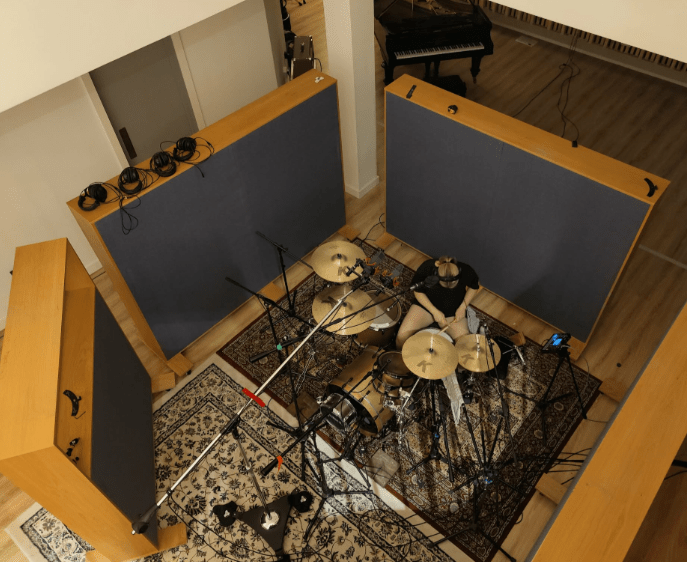
DRUMS
Beetroot has an AMAZING-sounding room for drum recording. Huge high ceilings, 175m² space. On the record there is no artificial reverb whatsoever – that’s all just the sound of the big room captured on a stereo mic, sometimes gated in the mix, sometimes not.
The kit was my Noble and Cooley Horizon kit (it’s Mark Brzezicki’s favourite-sounding kit on the planet, incidentally), and one of two Noble and Cooley snares – we switched between a Solid Cherry and an Alloy Classic, depending on the song and feel.
Amelia is a remarkable drummer with a great feel and consistency in her hits, so it was really easy to capture that.
Unlike pretty much everything else I DO EQ drums on the way in a bit (otherwise it can be off-putting for monitoring for the band).
From my notes;
The kick was recorded with a DPA 4055, which I love because it is very, very flat and honest, into a Neve 1084 with a touch of EQ.
For snare I used a right-angled SM57 I ordered years ago from America on the top head. The company who made it realised that for it to sound like a proper SM57 the internal volume had to be identical, so they spent ages getting the dimensions exactly right.
For the bottom head of the snare I used an old vintage SM57 I got when Townhouse Studios went under. It has Townhouse stamped on the body and it’s become a bit of a lucky mascot. I only ever use it on bottom snare.
Both of these mics went into Heritage Audio 8173 mic pres, which are beautifully-made clones of old Neve modules. I’ve been lucky enough to compare them directly against vintage Neves and they really DO sound and react just like them, unlike a lot of the modern copies (including a lot of the modern Neves!)
Both mics got a little EQ from the pres, and were then passed through one of my favourite bits of kit, the Anamod ATS-1 tape simulator, set to 15ips and Ampex tape.
Toms were recorded with Josephson e22s condenser mics (the Steve Albini mics) into API 512c preamps and a Massenburg GML 8200 EQ.
Overheads were my favourite mics – a pair of Milab VIP50s set up in ORTF above the kit, about 4 feet above the snare. These went into a Buzz Audio mic amp, then a Crane Song Ibis EQ – not doing any eq’ing, really, just a high pass filter at 80hz.
Hi hats and ride were Schoeps CMC-6s with cardioid capsules into AEA mic preamps with the HPF set quite high and a little bit of top end added.
The room mic in my set-up is crucial for drums (actually for everything – if I’m recording even just a shaker in the big room I always record the room too) and it’s a Royer SF-24, into a DACS Micamp, which is an incredibly pure mic pre, which I use all the time for classical recording, or piano, or anything acoustic. That mic is set up in the room more or less permanently.
San Francisco – Acoustic (Brontës)
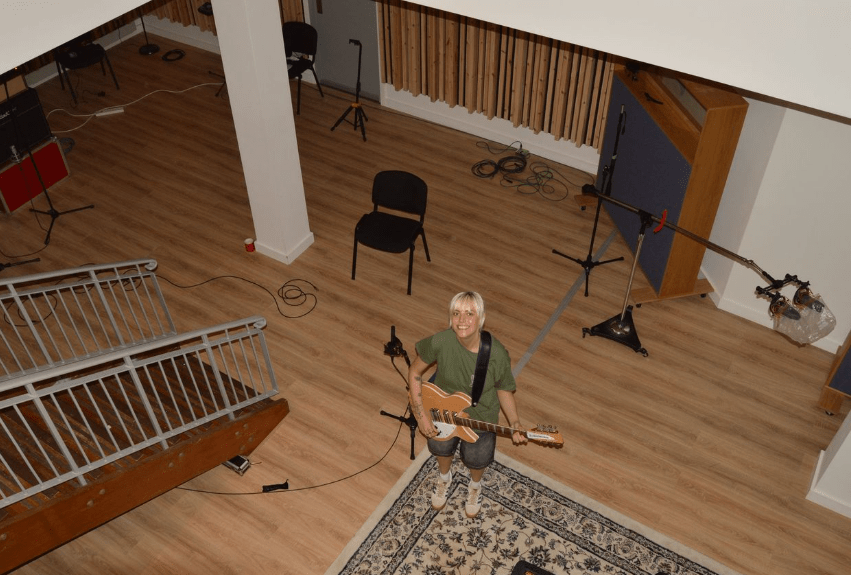
GUITARS
Erin did the electric guitars in the control room, with the signal being sent through to the live room via a pair of Alan Smart DI and distribution boxes. We tracked all the guitars through my main studio pedal board, mainly because it has really good buffers throughout to preserve signal integrity all the way through to the amp.
We used a few Pete Cornish pedals, mainly his OC-1 compressor set very subtly. We also occasionally used a Kingsley Page boost and a Kingsley Harlot overdrive, but generally if we wanted the guitars grittier or dirtier we just went back into the live room and cranked the amps a bit – Matchless amps have such a glorious drive sound anyway that you’re not going to get from a pedal.
Most of the time the guitars were put through something like a Dawner Prince Pulse or a Free The Tone Future Factory delay to give it a little bit of movement. I really like having two amps for each main guitar part, so that at the mix you can have it anywhere from fully wide stereo, to just a big wedge of mono guitar either side of the mix (AC/DC’s Back In Black album is a great example of this – for me that one of the best-sounding albums of all-time) and I like using two different amps, albeit set similarly, to avoid having that “big mono” thing of having the same signal either side of the mix. You use the discrepancy to shape the mix.
We used a bunch of different guitars on the record, mainly Erin’s Fender Starcaster and my Gretsch White Falcon, but we also used a Mike Bowes strat, an Iconic Guitars Tele, a Rickenbacker 1993+ 12-string, and a Danelectro Baritone. One of the advantages of having done this for so long is that I’ve built up a nice collection of gear that I know really well, so I have a good idea of what will work where. It’s also really handy that I live very owe to the studio so I can just pop up home and pick something up if we need it.
Basically every single thing was considered on a song by song and part by part basis when it came to doing the guitars – not just whatever guitar was appropriate for the part, or what pedal or what amps, but right down to the PICK that was used. I had 4 or 5 different picks lined up next to Erin and we’d try different ones for different parts constantly.
Actually there’s a really good example of that right at the start of the album. The very first thing you hear is a double-tracked guitar (Starcaster one side, Falcon the other) which has a very distinctive “scraaag” to the attack of the note, caused by using a very specific pick but turned the wrong way round to use the stippled end. It gives the part a great presence in the track without having to turn it up in the mix. Attention to detail is everything, really!
The main thing though was just capturing Erin’s playing and sheer creativity. It was inspiring watching her come up with guitar parts on the spot in the control room, and then shaping sounds to match. It was a lot of pressure but she made it look effortless.
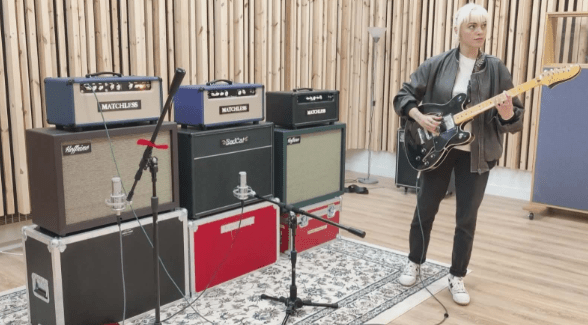
For the live tracking Erin was playing through my Matchless HC30 into a Hoffnine 1×12 cab with a Celestion Alnico Cream speaker, caught with a Shure KSM 353 ribbon mic into a Neve 1073, with the cab set up in an iso booth just off the main live room, and the head set up in the room itself. I think we did all the live tracking with Erin’s Fender Starcaster.
When it came to doing the guitar overdubs we set the amps and cabs up in the main room, meaning we could have them blasting out at the volume they were designed to be played at. It was SERIOUSLY loud in that room!
Every part was recorded through two different amps – a Matchless HC30 head into a Matchless 2×12 cab, fitted with a Celestion Alnico Cream and a Creamback H75, and a Matchless Laurel Canyon 40w head into a Hoffnine 2×12 fitted with the same speakers. From my notes I can see that it was always the Alnico Cream that was mic’d up and recorded for these songs.
We did also use an RD Dualist head into another Hoffnine 2×12 with the same speakers, which we used for a baritone guitar part and for a Rickenbacker 12-string part. The cabs were mic’d up with Shure KSM 353 ribbons (about 14″ off the grille) into a pair of Heritage 8173 preamps with no EQ engaged but just a low HPF at 35hz.. The room mic was around 20 feet back from the cabs, set right in the middle of the two, and again fed into the DACS Micamp as ever, with a HPF set low.
Erin recorded the guitars in the control room, with the signal being fed through a pair of Alan Smart DI and distribution boxes. I set up my main studio pedal board, mainly because it has a series of high-quality buffers throughout it, maintaining signal integrity until it hits the amp.
There are a few Pete Cornish pedals on there, and we used his OC-1 compressor pedal pretty much constantly, but subtly. We also used the Kingsley Page boost a lot and a bit of the Kingsley Harlot overdrive, but generally if we wanted the guitar sounds dirtier we just went through and cranked the amp a bit. The natural drive of Matchless amps is far better than a pedal can give you anyway!
The guitars were often recorded in stereo, with either a Dawner Prince Pulse or a Free The Tone Future Factory delay giving it all a bit of swirl and movement.
I much prefer having two amps recorded when it comes to mixing a record, because I can place it anywhere from full, wide stereo, to just a big wedge of sound in sort of wide mono either side of the mix (AC/DC’s Back In Black album is a perfect example of this – for me, one of the best-sounding albums ever recorded).
I prefer to use two different amps for this, but set similarly, to avoid the “big mono” thing of identical signals in stereo across the mix. You can use the slight discrepancy better, I think.
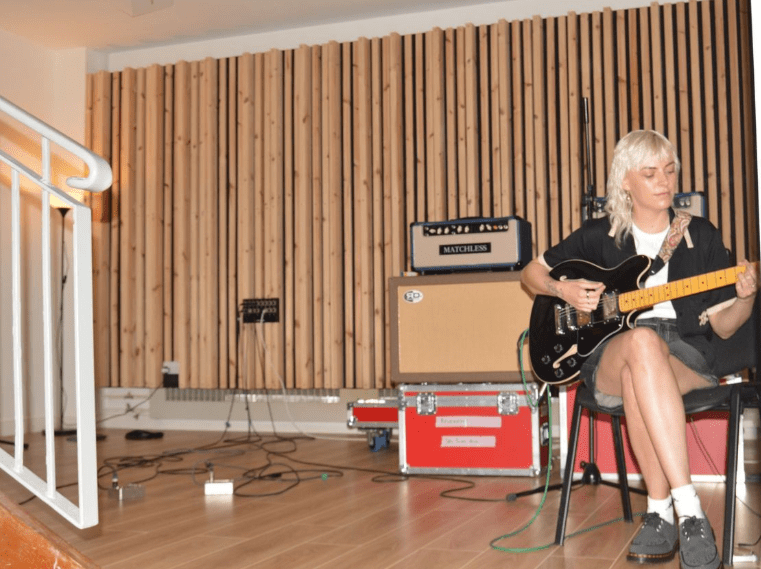
We used a good few different guitars on this album! One of the advantages of living so close to the studio is I can pop round the road and pick up a different guitar if we need it, and be back in ten minutes. It’s also an advantage that I’ve been doing this for such a long time now I’ve accumulated a nice collection of gear that I know will work.
Again looking through my notes, as well as Erin’s Starcaster (which sounded fantastic through the Matchlesses) we used a Gretsch White Falcon a LOT, as well as a Mike Bowes strat, an Iconic Guitars Tele, a Rickenbacker 1993+ 12-string, a Danelectro Baritone, and for acoustics my Gibson Advanced Jumbo.
Basically every single sound was considered as we went along, not just in terms of what guitar to use through what pedals into what amp, but even what PICK to use. I had four or five lined up next to Erin in the control room and we’d try them all out depending on the part.
Actually you can hear that right at the very start of the album; the guitar that opens the record has a very distinctive “scraaag” to the attack of the note, which gives it loads of presence in the track, and was done by using a very particular pick turned the wrong way round to use the stippled end.
After all that it was just down to Erin to nail the parts, which she did again and again throughout the record, with great feel and timing.
ACOUSTIC GUITARS
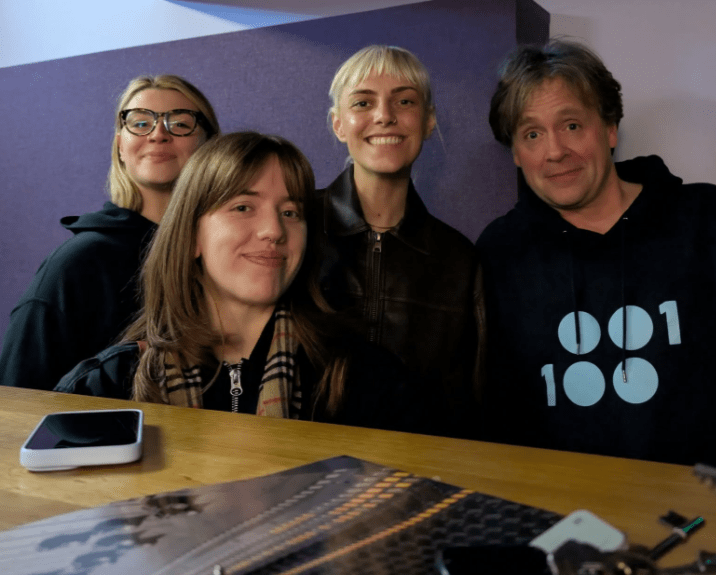
There’s not a lot of acoustic guitar on the album but what’s there is a Gibson Advanced Jumbo recorded with a Flea 47 mic (a beautiful clone of an old Neumann U47 – not exactly cheap but costs a fraction of what a vintage Neumann one does!) into the DACS Micamp with a HPF set at 60hz, no other EQ or compression. The room mic was also recorded as usual.
Acoustic guitars were recorded in the big room, using a Flea 47 (a beautiful-sounding clone of an old Neumann U47 – not cheap but a fraction of the cost of a vintage one!) into the DACS Micamp, with the HPF at 60hz, but no EQ or compression. I also took the Royer room mic at the same time, as usual.
BASS
The bass was done using my Fender Jazz Bass into an Ampeg head feeding an Ampeg 4×10 cab, mic’d with a Shure KSM 353 ribbon, into a Neve 1081 pre with no EQ at all. The DI was a Neve mono DI, I to a Neve 1073 preamp, again with no EQ, and into a Little Labs IBP phase adjustment box. The two signals were then fed into a Crane Song STC-8 compressor doing virtually nothing (bass is one of the very few things I compress at all on the way in) and onto the Anamod ATS-1 Tape Simulator, this time at 7.5ips, again Ampex tape.
We played it through the main studio pedal board, with no pedals engaged, just to get the benefit of the buffers and the tuner.
It’s worth mentioning again that when they first came into the studio to do the first six songs, Erin was covering bass too. So she had to come up with bass lines on the spot and execute them really well. I think it’s testament to her talents that it doesn’t sound at all like the guitar player just lobbing down some bass to fill in, it sounds like a really good bass player.
VOCALS
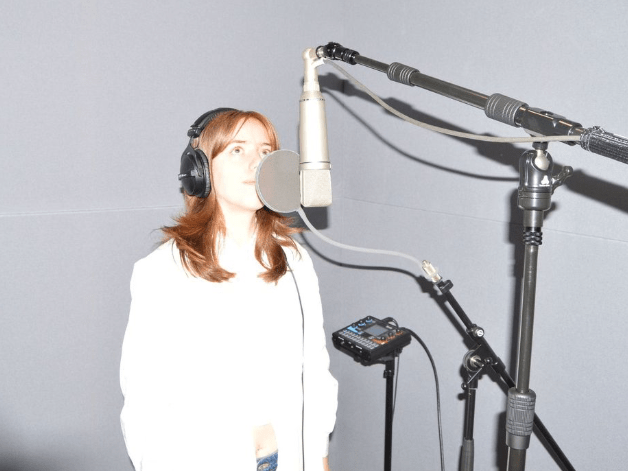
When it came to vocals, Eva had already given us great guide vocals from the live takes, which always takes the pressure off the singer a bit. I like to use the same mic and signal chain for guide vocals as I do for the “proper” vocals if possible, because quite often when a singer doesn’t think they’re doing the finished performance they’ll do something interesting or different or exciting that you just can’t quite capture again later on, so it’s nice to have them properly recorded. When I’m recording a live band it’s generally the lead vocal I’m keeping an eye on most in terms of peak levels etc.
With that in mind we cut the lead vocals in the same upstairs booth as we used for the live takes. I Iike to get 4 or 5 really good vocals and comp from there, so I’m always listening out for signs of tiredness or strain, because the worst thing you can do is overwork a singer.
Eva is really consistent so it was easy to get great performances from her. When we comped them up it was just a case of capturing the vibe of the song best. Brontës lyrics are really important so the way Eva sells the tone of each song is crucial.
For 99% of the lead vocals I record I use the same signal chain; a vintage Neumann M269 from 1967 that is just a fantastic-sounding mic. It needs serviced (as does my Flea 47) but I’m terrified to get it done in case it comes back sounding different!
I used a Neve 1081 for the mic pre, no EQ but the HPF set to 56hz, then into my Crane Song STC-8 for a tiny bit of limiting on peaks. The STC-8 is an amazing bit of kit, the most transparent compressor I’ve ever heard, but that means you have to be careful and keep an eye on it because it can be doing more than you want without notable, audible artefacts.
When it comes to comping vocals I’m equally happy doing them on my own or with the artist present. For this record I did them with the band, which was probably important because they had such a strong, clear idea of how everything should be for the entire album.
The backing vocals were all recorded using the same signal chain and mic. Quite often when the lead singer is also singing harmonies I’ll swap the mic out for something else (usually the Flea 47 or a Milab) because it can become confusing for the listener if the lead vocal and harmony sound exactly the same. For this record I just left the old Neumann up, because they were constantly chopping and changing who did what and when, and it would have been carnage to keep swapping stuff around.
The backing vocals were done really quickly – they had already worked the vast majority of the parts out before they came into the studio so really my job was just to keep out the way and let them get on with it. For the record, the handclaps were recorded in the big room with the Royer stereo ribbon into the DACS pre. And much hilarity ensued.
We’d taken guide vocals along with the live tracking, and Eva had turned in great performances then too, which takes a little bit of the pressure off when it comes to laying down vocal overdubs. When possible, I like to use the same mic and signal chain when we’re tracking the band as we’ll be using when recording the “proper” vocals, to make them useable in the final mix if need be. Sometimes when singers don’t think they’re necessarily giving you a final take they do something interesting or special that you can never quite capture again, so it’s good to have it recorded the same way so there isn’t an audible discrepancy.
So, vocals for me are 99% of the time recorded with a vintage Neumann, and M269 from 1967. It’s an absolutely remarkable mic which is basically irreplaceable! It needs serviced (as does the Flea) but I’m terrified to get it done in case it comes back not quite the same!
All the vocals were done in the upstairs booth at Beetroot, just like the live vocals, again for consistency. The Neumann was fed into a Neve 1084, no EQ but a HPF engaged, then into the Crane Song STC-8 doing the tiniest bit of limiting on peaks. The Crane Song is an amazing compressor, the most transparent I’ve ever heard – which means you need to be careful you’re not doing too much because it’s not at all obvious that it’s working away.
I like to get 4 or 5 good passes of a vocal so I can comp it up later, and Eva is really consistent so I had a load of great vocal takes to work with. Sometimes I comp the vocals on my own, sometimes with the artist present, and I leave that decision entirely down to them, I’m comfortable either way. In this case we all did the comping together, which worked really well and I think was probably quite important: the band always had such a clear idea of what they wanted the record to be that it made my job really easy.
Backing vocals were done really quickly, again using the same signal chain. Often if the lead singer is also doing harmonies I’ll swap out the mic (usually for the Flea 47 or a Milab) and change the mic pre, but for this record we just kept it the same, because they were all switching around who was doing what constantly and it would have been carnage!
Again, they came in with the harmonies all worked out so really my job was just to shut up and let them get on with it.
For the record, the handclaps were all recorded on the big room using the Royer SF-24 into the DACS pre, and much hilarity ensued.
The Brontës Say…
The Mumble: What
Working with Stuart is possibly the best experience we have had in the studio. We all completely understood each other and got comfortable straight away. Entering the studio with half an album and half written tracks would have made a lot of people roll their eyes, Stuart on the other hand saw this as an exciting challenge to help us explore our new sound and we couldn’t have done it without him. The equipment we got to use was fantastic, and the space that Beetroot is really brought the album up to the next level. The girls agreed that we felt like we made magic within the 3 weeks of recording, it was full of laughter, creativity and hard work
MUMBLE: So you have a new band with you to record – what do you say to make them relax, get on board with your methods and what mantras do you repeat through the recording process?
STUART: It’s really important to me that everyone has a really enjoyable time making the album – it should be great fun and a really memorable, positive experience. We’re there to do serious work to the highest possible standards, but I don’t think it should ever FEEL like hard work for the artists – even when it is.
I want to always create an environment where people feel safe and valued, and confident that they’re being heard. I think one of the best compliments I’ve had was last year when I’d finished working on the new wojtek the bear album, and Tam Killean (singer) said “Honestly, it feels like you’re just having a laugh with your mates for a couple of weeks and suddenly you’ve made a record almost by accident”.
THAT’S what I’m aiming for. Everyone has a great laugh and it’s all really relaxed, but all the time there’s serious work going on in the background and the quality never dips and there’s no compromises. Put it this way: I’ve never once seen somebody bullied into a better performance, but when folk are having a great time, they tend to make great records.
So, it’s all about trust, really. The artist has to trust me and understand that I have their best interests at heart. You need to bond with them and I work hard to do that as much as possible. I also make it clear that if they really don’t like something on a track, it doesn’t go on the final record, whether it’s a guitar part, or a harmony, or a mix detail – if I come up with something they don’t like, it comes off the record.
It’s not just about understanding where an artist is coming from musically, it’s about trying to understand what they’re trying to say lyrically too. I don’t tend to ask what a song is about + although I’ve done just that a couple of times recently) but will always try to see what they’re trying to convey, and if in the process they choose to share the backstory to a song that’s great too.
It comes back to the importance of trust between an artist and producer. You always have to understand that you might be helping them express their innermost feelings, perhaps in the only way they feel able to, and that can be a big responsibility. The artist has to trust that you’ll help them do that and not get in the way of that.
I think that’s really important – it’s not MY record, after all, nobody’s buying it because my name’s on it somewhere, it’s THEIR record. I think that actually makes artists more relaxed about trying things out and persevering for a bit even if they’re not sure, knowing that if it doesn’t work we won’t use it.
I often think this is a huge mistake that producers make nowadays – the idea that they have to be doing SOMETHING to justify their existence. I’ve seen producers change the key of a track by a semitone, or slow it down a couple of BPM, with absolutely no purpose other than to say they’ve contributed something to earn their fee.
Don’t get me wrong, I’m more than happy to make suggestions and chuck ideas in all the time, but I genuinely only care about the finished product, and you have to trust that the artist has at least some idea of what they’re aiming for.
For similar reasons, I honestly don’t really care who plays what on an album. I work a lot with solo artists, and often that’ll be just me and the artist playing all the instruments, maybe bringing in a couple of folk we need for specific parts. So I’ll quite often chuck parts down on a record, on guitar or percussion or a backing vocals or whatever, but if the band would rather it was them performing everything on a record and want to do the parts themselves, that’s absolutely fine too! I’ve absolutely no ego in that regard by now.
I’m also really careful to tell people not to let me move on if they’re trying something and they think they haven’t quite nailed it yet, especially singers. I might think they’ve given me four perfect takes and I’m ready to move onto the next song or the next instrument, but if they’re not happy yet and think they can do better it’s important they know they can stop me and ask for more time.
To be honest, almost none of this applies to the Brontës album because they were so clear in where they were heading with it all and what they wanted to hear, my job was really just to encourage great performances out of them and make sure it was well-recorded! The biggest mistake I could have made would have been interfering too much in what they were doing and trying to stamp a sound on a band who had already established one. I see that again and again and it’s such a mistake.
So, I guess my mantra is just leave things as they are unless there’s an actual benefit to the record in changing something. So often producers now change what a band is doing and it’s not better, it’s just different. Or diluted. Or just worse.
MUMBLE: Everybody has the favourite bits on an album, but producers always have a different set of ears. With that in mind can you tell me your three favourite moments of production, when everything just works & works wonderfully
Stuart: Ok, this is the hardest one to answer so far! Primarily when we’re talking about production touches I want to make sure I mention moments that I had at least SOME hand in – I can’t emphasise enough that the vast majority of the production choices on this album were made by the band themselves, my role was really more about getting performances and sounds.
Also, I’m a guitarist so my choices are inevitably skewed towards guitar moments. There are no keyboards anywhere on the album, so it’s all just lots of different guitar textures built up, and we spent a lot of time getting the sounds spot on.
That said, I think my three favourite production moments would be:
1 The opening few bars of Asking For A Friend. The initial bass hit has a fantastic growl to it, you can really hear the big room at Beetroot in the drum sound, and then seven beats in there’s a lovely stereo tremolo guitar that really sets the mood and drives the track. It was a total pain in the hoop to get it to sync right through the song but it was worth it.
2 Second moment is in San Francisco, in the bridge before the choruses, after the line “when we used to stay the night” Erin plays this lovely, melancholy four-note guitar figure that crops up throughout the song. It’s a particularly great-sounding strat on the neck pickup with the tone rolled most of the way off. When you commit to something like that on the way in, rather than eq’ing it in the mix, you really have to be sure and willing to commit, or it can cause you a world of grief later – but it also hits the amp differently and generates different harmonics and overtones. Listening back I’m really pleased with decision, because it contrasts so well with the main guitar, which is a very jangly Gretsch White Falcon.
3rd one would be the start of the song Bad Manners (which might be my favourite track – although Louise says it her favourite, so I’m probably just copying her) which is a cracking, almost Highlife guitar part that Erin came up with. At the mix I decided to add a very harmonically-rich stereo delay from an Eventide H7600 and it bounces around behind the riff really nicely. I was chuffed with that one.
Also, I’m going to cheat and add a fourth moment, which is the handclaps throughout I Think I Love You – not for any radical thinking or ground-breaking technique, but because we just had so much fun doing it! The mood was fantastic throughout the sessions and this was a highlight.
When I went to edit it them later on for the mix I realised that actually quite a lot of it was unusable; perfectly in time and all that, but audible sniggering and laughter throughout. If you solo them you can still hear the odd stifled laugh, even in the final edit. I kept it because it’s a nice memento.
Mumble: Staying with the album, what are your three favourite moments from the band, when they are working & working wonderfully?
Stuart: My favourite moments from the band – that’s even tougher! There are genuinely SO many!
The first one is easy, though – it’s the final section in Wouldn’t Be Me, the “move on, babe – come on, babe” bit, because it just felt like everything the album was about came together perfectly in that one moment. I got pretty emotional mixing that song as a result.
Because…the whole album is essentially a document of the lives and experiences of these four extraordinary people, and in some ways it’s really sad as a result. To over-simplify it, it’s kind of nine songs about why guys are a bit crap, and one song about how great and supportive their friends are. And they’re a proper wee gang, there’s an amazing spirit and bond between them, they write the songs together, everyone contributing musically, everyone pitching in with their experiences and feelings.
The end result is really razor-sharp and funny (“…in those ugly jeans that your mum still cleans” STILL makes me laugh every time!) but it’s also really sad throughout, because at the end of the day this is how they’re experiencing life. It also informs just WHY they’re called Brontës and specifically not THE Brontës) in the first place, incidentally.
So, for me, that song is the quintessential Brontës song. It’s defiant, it’s supportive, and it’s catchy as all hell.
I think for the second moment I’d have to go for San Francisco. It’s the most obviously, openly sad song of the whole album, but there’s a bit of hope there too, it’s one of Eva’s best vocal performances because she’s managed to really convey that yearning and regret, and the musical arrangement is just gorgeous throughout.
Third…I’m going to go for Bad Manners, because I think it’s maybe the best bit of writing on the record. Maybe. It conveys a relatively simple idea in a really direct, powerful way, it has that sadness to it, and again it’s beautifully arranged and played. Also, it’s not one of the singles so it’ll inevitably get a bit less attention than other songs on the album, but again I have to stress – the ENTIRE album is really strong!! Listen to it ALL!
I’m also going to cheat here again and give you a fourth choice, which is the mood we created for Thelma And Louise, because it reminds me a bit of one of my favourite R.E.M. albums, Fables Of The Reconstruction. It’s dark, a bit gothic, a bit moody, and a bit different from a anything else on the record.
The Brontës Say…
The Mumble: What is the over-arcing message behind the album, what are the songs about?
The Brontës: The tracks are a collection of real and shared experiences as young women growing up in Glasgow. It’s about love, loss and the challenges we face such as how we have been treated by others or dealing with grown up problems like low pay and high bills. We have turned our mutual feelings of sadness, hurt and joy into art together and this piece is the perfect portrait of what we have lived so far. The message we wanted to send with the songs and lyrics is that it’s ok to struggle, we all do in our own ways, and it’s good to talk about it.
The Mumble: How has recording the album progress’d you as musicians, songwriters & a band?
The Brontës: Before recording the album we had not fully found our sound, and the final day we walked out the studio the new sound of Brontës had been discovered. Stuart MacLeod really helped us nurture the tracks with the resources in Beetroot Studios and we could not have got to where we are without him. Going into what we are writing next we are definitely more confident as songwriters and with each other as a band.
Mumble: So, back to Stuart, & congratulations, that’s an album completed – but, which are your three favourite albums of all time (other producers) and why?
Stuart: Oh, man – that’s a KILLER question! I’m TERRIBLE at this! I’ve tried so many times. In lockdown someone asked me to pick my ten favourite albums of all-time, I managed to limit it to 100, and then spent weeks kicking myself about the records I’d left out.
For context, I still buy three or four albums a week (Louise is adamant it’s more than that) and still discovering great albums regularly.
I can give you my all-time favourite album, though, which is The Rolling Stones Exile On Main Street. It’s been my favourite album since I was about 15 or 16, and I’ve still never heard anything that knocks it off that spot, because it just has everything. If you told me I could only listen to one record for the rest of my life, it would be Exile, because it covers so much ground.
It rewards repeated listening like few other albums, and the real gems are the tracks worth digging in for and persevering with. There’s the obvious BIG tracks like Tumbling Dice and Happy, which are pretty much the perfect Stones songs, but for me it’s things like Just Wanna See His Face ( a track so good it caused Tom Waits to re-evaluate his entire career and change tack completely) and the ballads like Let It Loose and Shine A Light that make the whole thing so special.
Incidentally, I once managed to call that last track “Line A Shite” on live radio by accident then spent a couple of minutes digging myself deeper by desperately using the phrase Shine A Light as often is I could. Not great.
Anyway, it’s sort of ironic, because the whole album is pretty horribly recorded and mixed, and I absolutely would not have it any other way. It’s a good reminder for me of what’s actually important in a record.
Bottom line: if aliens ever invade and ask what rock and roll is, hand them a copy of Exile, because that explains it better than anything you can say.
Next choice…hmmmmm…ok, if I were asked instead, “you’re on a desert island and you can only listen to one ARTIST for the rest of your life – who do you choose” then my answer is David Bowie, for similar reasons to before. He covers so much ground musically, and fantastically, that he’s the only feasible choice.
So, I’m going to cheat again, and have three albums for the price of one here: my second favourite album of all-time is Hunky Dory / Low / Scary Monsters, and I can’t separate them. My favourite is probably whatever one I listened to last, and I love them all for very different reasons.
Hunky Dory contains my favourite song by anyone, ever, Life On Mars. But it also kicks off with Changes, for God’s sake!! Quicksand, The Bewlay Brothers, Queen Bitch…it’s just flawless.
Low is maybe the bravest, boldest move I can think of by any major artist. It’s the Bowie album I listen to most by far, and I’m still utterly fascinated by it. For years I had a habit of banging on about side two being absolute perfection – which it IS – and how utterly ground-breaking and game-changing it was at the time, with all that dream-like quality and its icy textures, and I often think of it as being like modern classical pieces. But side one is every bit as brilliant and out there and just so listenable. I absolutely love Low.
And then, Scary Monsters is probably the one that makes me smile most. It’s just a brilliant art-rock album, with fantastic playing and tremendous songs throughout. His Tom Verlaine cover is better than the original (and I love Tom Verlaine) and it has probably my favourite Bowie single in Ashes To Ashes, which is beautifully-produced. Actually, the whole album is; I got obsessed recently with the handclaps in Fashion. It’s such a complex pattern they’ve obviously had to chart that all out before performing them, and it’s incredibly well-done. I’d been listening to that song for DECADES before I really noticed what they were doing.
The whole end section of that song is genius production, actually – Tony Visconti at his best. There’s a little rising and falling harmony in the “talk talk talk talk…” bit that only happens every second time. Little details like that everywhere.
Ok, third album. This is next to impossible, but I’ll go for The Blue Nile’s “A Walk Across The Rooftops” for all sorts of reasons. It’s an utterly flawless masterpiece. Paul Buchanan is my favourite singer, Callum Malcolm is, I think, the finest engineer to have come from the UK (I listen to his work and it’s honestly humbling – a reminder of how far I have to go myself) and it’s one of those records where every single moment is considered, perfected and honed to devastating effect.
It’s a brilliant musical journey, and I listen to it at least once every few weeks. In fact, I’m going to put it on now.
Incidentally, I WAS going to choose Hats, which is lusher and richer and sometimes I prefer it, but A Walk Across The Rooftops just pips it because it’s a little odder and completely unique as a result.
I’m going to cheat again and have a fourth choice, because my favourite piece of music ever is Beethoven’s 9th Symphony, so I need a recording of that on there. I have, I think, 8 different performances of it on cd from various different conductors and orchestras but really anyone of them will do.
It’s regularly cited as the pinnacle of human artistic achievement and I’m absolutely not going to argue otherwise.
Mumble: One last question, what does the rest of 2026 look like for Stuart Macleod?
Stuart: Well, at the moment I’m sitting back a bit waiting for a few albums I’ve done to come out: there’s The Bluebells new double album This…Is The Bluebells which I produced, and hard on its heels the wojtek the bear album I Don’t Think You Want To Hear This, which I engineered and mixed. They are both absolutely fantastic records! Brontës’ album is out around then too.
Then I have two more later on the year, one by the wonderful Emma Dunlop, which I (barely) co-produced and mixed. She’s a serious talent and a cracking person and it’s a great record!
Then there’s an album which, actually, I can’t discuss yet! But it’s by a long-established Scottish band who have had huge sales on the past and I really hope this one does the same because it’s a great record and we had a cracking time making it.
To be honest, ALL these albums were an absolute joy to make, seriously great fun.
I’m starting an album with Pale Fire very soon, there will be a new Louise Connell album imminently, and Louise and I have been doing a bit of film soundtrack work too, which will see the light of day very soon.
After that…I’m available for anything interesting! And I really hoping we’ll be squeezing another Brontës album into the schedule sooner rather than later too 🙂
BRONTËS
 themumble.uk