A Poet Living On the Isle of Arran has Solved
The Greatest Literary Mystery Of All Time
Damo Bullen – the Agatha Christie of History Mysteries – has done it again. On his return to Britain after a search for Shakespearean traces on the continent, Damo return’d to the seclusion of his home on Arran in December. Once there, he began to ruminate on, & solve, the world’s greatest literary mystery – who is the mysterious Mr WH, the dedicatee of Shakespeare’s 1609 sonnets?
For over four centuries, the identity of Mr W.H. has remain’d a puzzling conundrum, but according to Damo, “there is no such thing as an unsolveable problem, just something I haven’t taken a look at yet.”
Wandering the rugged fells, empty glens craggy peaks & windswept beaches of Arran’s north end, isolated & introspective, he has made a monumental breakthrough in the case, declaring that Mr WH was certain Jacobean engraver call’d William Hole.
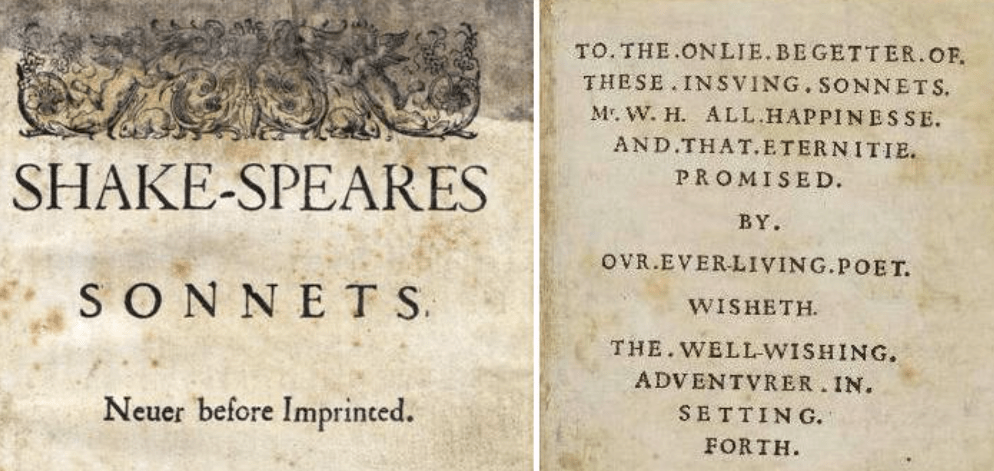
For those not aware of the intricacies of the mystery, it goes something like this. In the year 1609 a book was publish’d that has gone on to become world famous for two reasons. The first is that it contained 154 of William Shakespeare’s wonderful sonnets. The second is that they were dedicated to a mysterious Mr WH by the Sonnet’s publisher;
TO.THE.ONLIE.BEGETTER.OF.
THESE.INSVING.SONNETS.
Mr.W.H. ALL.HAPPINESSE.
AND.THAT.ETERNITIE.
PROMISED.
BY.
OVR.EVER-LIVING.POET.
WISHETH.
THE.WELL-WISHING.
ADVENTVRER.IN.
SETTING.
FORTH.
T.T.
Over the past four centuries, almost on an annual basis, a lengthy series of candidates have been put forward as the real WH. None of these, however, have been supported by actual evidence, & where the facts end, there supposition begins. Contrariwise, Damo has found over a dozen correlations to support his discovery, so let’s take a look at what he has uncover’d so far
VISUAL EVIDENCE
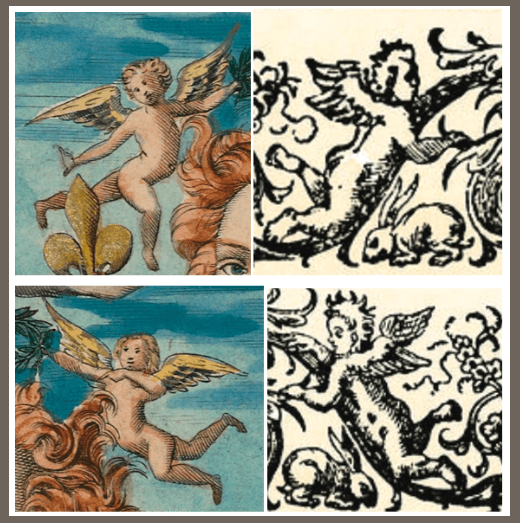
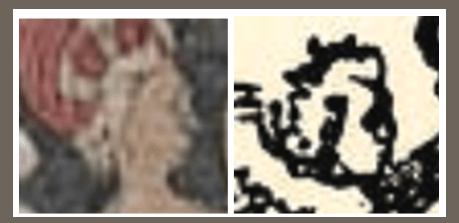
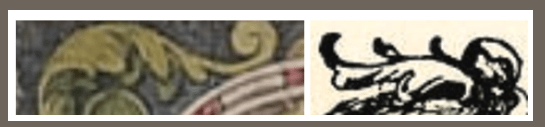
The following images are comparisons between the header image on Shakespeare’s Sonnets, & the work of William Hole, from which Damo concluded they were done by the same man.
The Sonnets’ header image & the title page of Michael Drayton’s Polyolbion share the same floating head flank’d by cherubim motif.
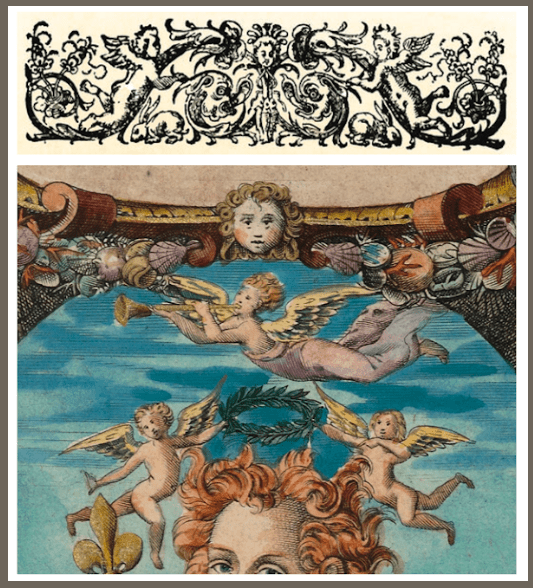
The cherubim share the same physiology, especially with the compisiton of their legs.
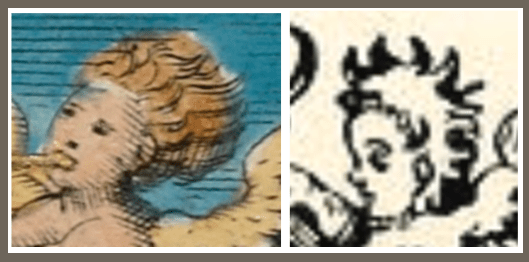
The same jagged hair…
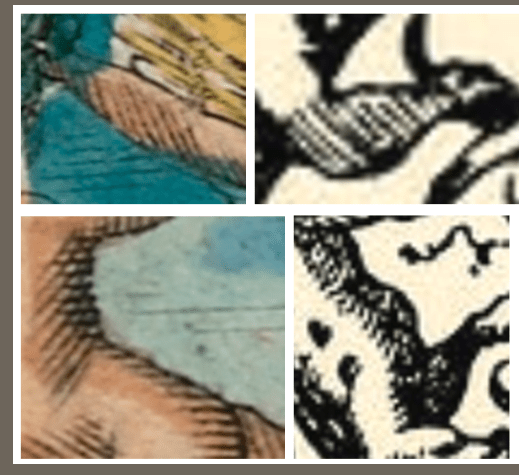
The same shading…
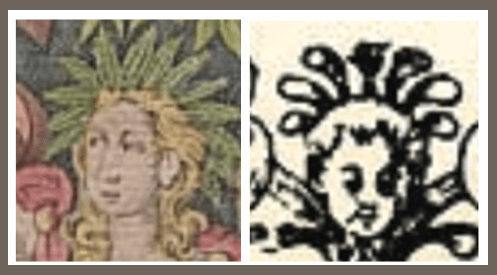
The same head-shape, hook’d eyebrows, noses, head-dress & narrow flat mouths – the image on the left is from Camden’s Britannia, engrav’d by William Hole in 1607
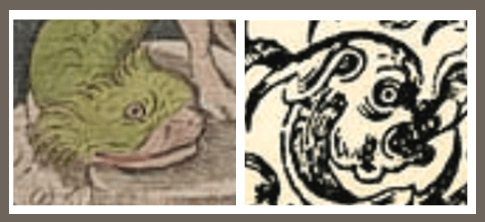
Similar weird phantastic animals (Camden’s Britannia).
Same profile & head shapes (Camden’s Britannia).
Same vegetation (Camden’s Britannia)
Outwith the pictorial evidence, Damo has built a network of interconnecting evidence about three figures whose initials appear as WH on the title pages of three seperate books, publish’d in 1606, 1609 & 1612. We know for sure that the 1612 WH is call’d William Hole, so Damo postulated that if all three WHs were the same man, then by logic the 1609 WH would be William Hole.
Seeing that Hole’s artwork graces the title page of the Sonnets themselves is a huge foundation block for, according to Damo, a solution to the world’s greatest literary mystery that has been hiding in plain sight all along.
For reasons that we may try to guess, Thorpe created this riddle, which must however have a solution, if only we can find it.
Isabel Gortázar
Damo has shown that each of the WH ‘avatars’ shares 4 or 5 ‘affinities,’ ie connections, between the other two, closing the following triangle of evidence.
1606-1609
(i) Shares the initials WH on the title page of a book printed in London
(ii) Both books publish’d by George Eld
(iii) On both occasions ‘WH’ procures a celebrated poet’s work for publication
(iv) The publication of Robert Southwell’s poem in 1606 leads to him being referr’d to as the ‘Ever-Living Poet’ in 1609
1609-1612
(i) Shares the initials WH on the title page of a book printed in London
(ii) The Sonnet’s dedication’s ‘W.Hall’ is a pun on William Hole
(iii) The 1609 dedication contains an allusion to William Hole’s commission of the 1612 Virginia Map
(iv) Share copious Pictorial correlations
(v) Connections to George Chapman & Hugh Holland
1612-1606
(i) Shares the initials WH on the title page of a book printed in London
(ii) Dedications written by the same mind
(iii) Both avatars are openly vocal Christians
(iv) Share connections to the Company of Goldsmiths
(v) The 1606 image of a Foure-Fould sphinx matches the style of William Hole’s lion (1605 Finsbury Park Archery map)
Damo will be publishing a full & detail’d account
Of his complete solution in the near future.
 themumble.uk